
When the Grid Becomes the Liability
Wildfire risk and the quiet repricing of the utility model

At first glance, Berkshire Hathaway’s $1.9 billion sale of utility assets in Washington looks routine. Portland General Electric is buying wires, wind farms, a gas plant, and roughly 140,000 customers from PacifiCorp. Another regulated deal in a sleepy sector.
The detail that matters is the partner. Manulife Investment Management will take a 49% stake in the acquired Washington utility business.
That has inspired a clean, appealing narrative: pair a utility with a capital partner tied to insurance and forestry expertise, and you get a next-generation owner built for wildfire risk. Grid meets forest. Risk pricing meets land management.
It’s a satisfying story. It may also be misleading.
Look past the marketing and this transaction looks less like a visionary climate-adaptation partnership and more like liquidity management under legal stress—with important implications for how investors should think about utilities as an asset class.
A Distressed Sale, Not a Philosophical Pivot
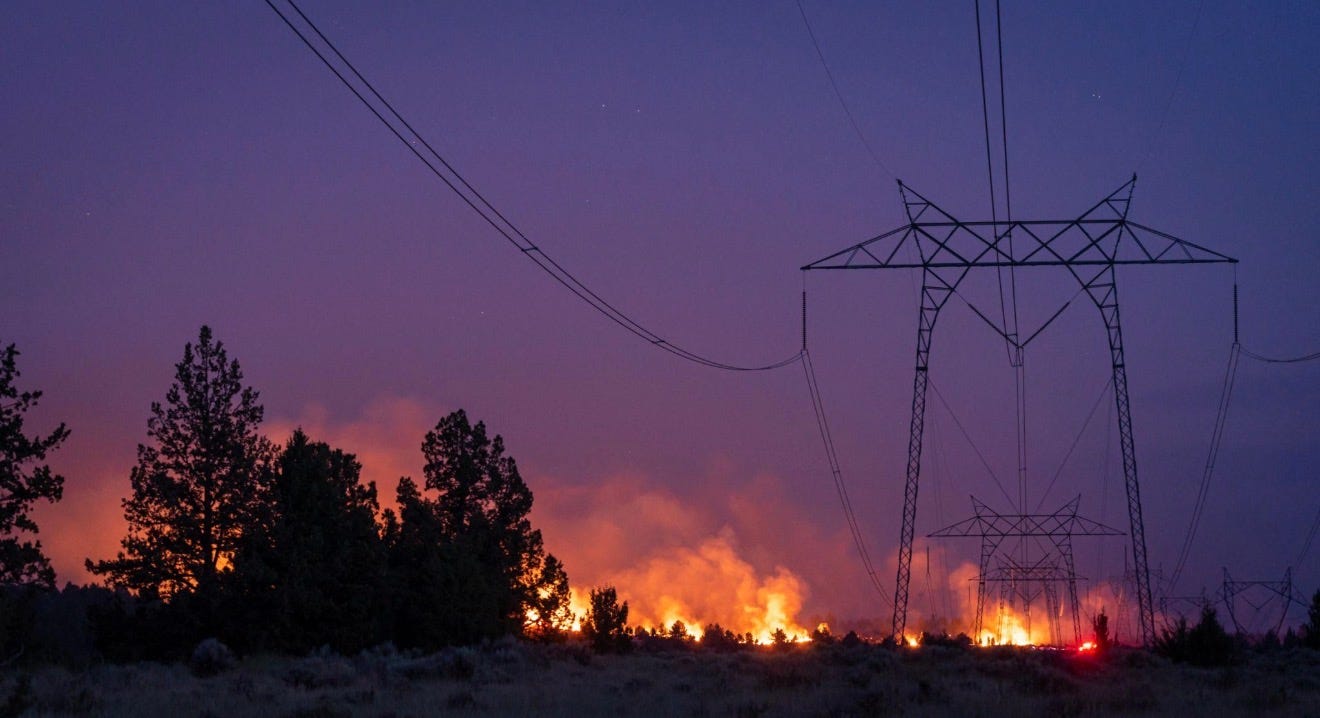
Start with the seller. PacifiCorp has been explicit about why it is selling: liquidity pressure from wildfire litigation, particularly tied to Oregon’s 2020 Labor Day fires. Management has pointed directly to credit strain and the need to stabilize finances.
Buffett has also been unusually direct about what’s changing in the utility business. In Berkshire’s latest annual letter he wrote that “it will be many years” before the company knows the final tally of Berkshire Hathaway Energy’s wildfire losses—and warned the implications could be industry-wide. Some utilities, he suggested, may no longer “attract the savings of American citizens” and could be pushed toward a public-power model.
That framing matters because it changes how this deal should be read. Berkshire isn’t exiting Washington because the grid there is uniquely unmanageable. It appears to be selling a performing asset to raise cash while it fights a far larger legal battle next door. This looks less like a strategic retreat from the Pacific Northwest and more like an amputation to protect the balance sheet.
If this were purely about “fire country,” Berkshire could have walked away wholesale. Instead, it carved out cleaner assets to help fund the messiest exposure.
The Buyer’s Logic Is Financial First
On the buy side, the story is similarly prosaic.
PGE is buying rate base at a defined multiple, with dispatchable gas capacity alongside renewables, and a long runway for capital spending regulators are likely to approve—at least initially. This is classic utility math.
The Manulife partnership helps solve a simpler problem: writing a very large equity check without blowing out leverage or diluting shareholders. Whatever the truth is behind the narrative about forestry expertise, the immediate function of a 49% partner is to make the capital stack work.
That doesn’t make the deal reckless. But it does suggest that the “forest management” story may be overstated. Commercial timberland management and utility wildfire risk are not the same business. Forestry is centralized and contiguous. Utility vegetation management is fragmented, adversarial, and political—narrow rights-of-way crossing thousands of parcels, negotiated homeowner by homeowner, under constant regulatory scrutiny.
Which brings us to the most underappreciated flaw in the bullish case.
The ‘Geographic Firewall’ Myth
A common defense of this transaction is that Washington offers a safer legal regime than Oregon—that PGE is buying into a different liability universe. Look closely and that firewall dissolves.
Investors fixate on inverse condemnation because California made it toxic: if utility equipment starts a fire, strict liability can attach even without negligence. But Oregon’s PacifiCorp crisis didn’t require that doctrine. In the landmark 2023 trial over the 2020 fires, the jury rejected inverse condemnation claims outright—and PacifiCorp still faced catastrophic exposure through standard tort law: negligence, trespass, and nuisance.
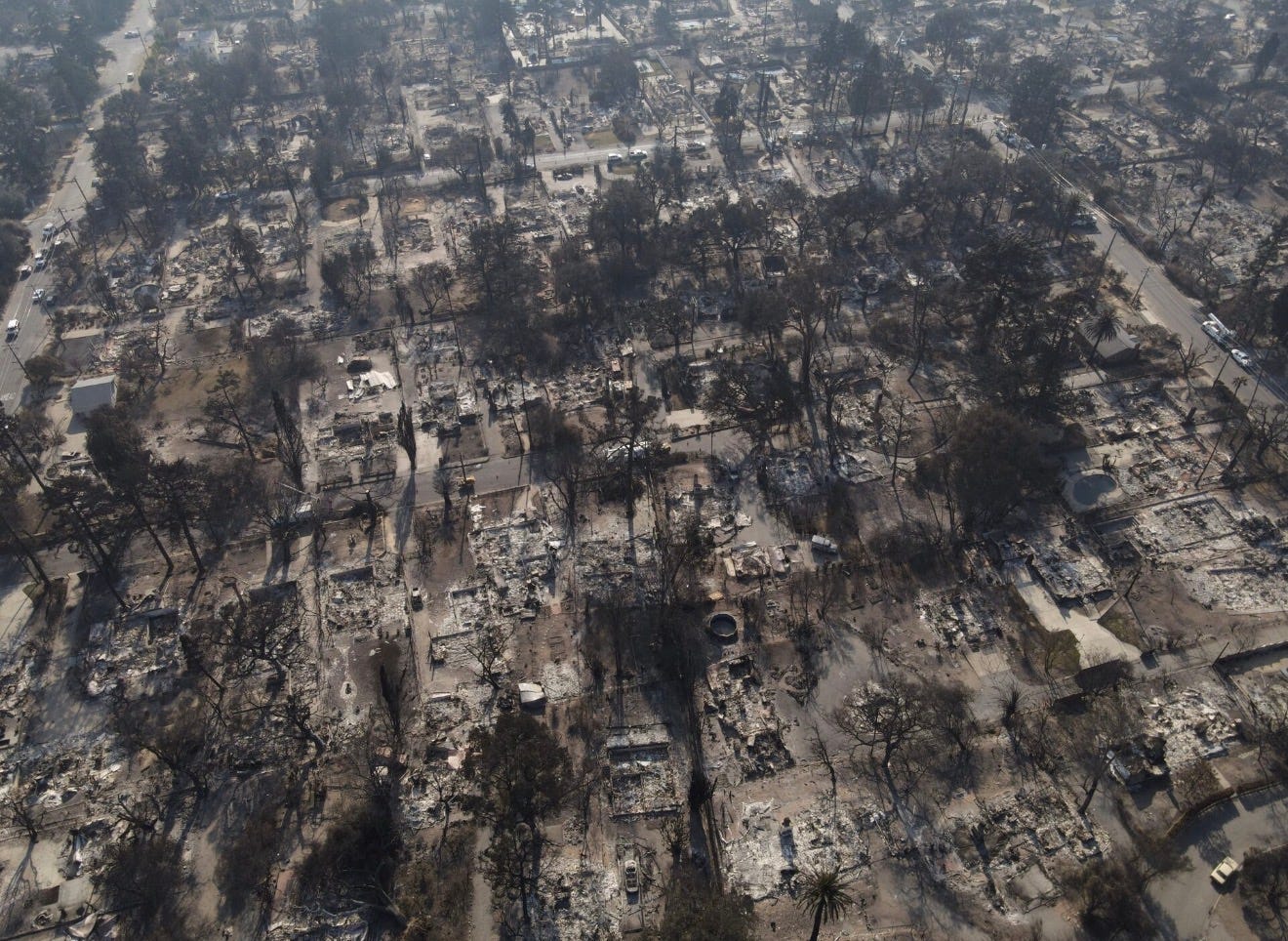
That’s the real danger. Once a jury crosses the threshold into gross negligence, damages aren’t limited to replacing burned property. They expand into non-economic and punitive awards that can dwarf physical losses. The math becomes violent.
Washington does not shield utilities from that dynamic. Like Oregon, it evaluates wildfire liability under negligence standards. If a jury decides a utility should have de-energized lines, trimmed more aggressively, or acted sooner during a wind event, the equity is exposed to the same jury calculus. Washington even carries its own statutory multipliers—such as treble damages for timber trespass—that aggressive plaintiffs’ attorneys will inevitably test.
Strip away the borders and the regimes look structurally similar: if your wire sparks a fire, you are at the mercy of a jury.
Which leads to an uncomfortable conclusion. Berkshire didn’t sell Washington because the law is worse there. It sold Washington to raise cash to feed the legal beast and manage contingent liability in Oregon.
PGE and Manulife aren’t buying because Washington law protects them. They’re betting—explicitly—that under their management they can prevent ignition, because once the courtroom phase begins, state lines don’t cap the downside.
What This Means for Utility Investors
This deal quietly forces a rethink of how utilities should be underwritten.
Historically, utilities were treated as bond-like equities: capped upside, stable returns, and near-sovereign credit. Wildfire liability breaks that model because the shock is non-linear and instantaneous. A single event can erase years of earnings. Rate recovery lags. Politics intrudes.
Equity is the crumple zone. Investors are holding a capped-return asset with effectively uncapped downside. That is not a safe yield play.
Credit has held up better, protected by the assumption that regulators will never let a utility fail. But that protection may prove conditional. Once liabilities strain liquidity and ratings, borrowing costs rise, capital spending becomes harder, and the feedback loop turns vicious. At the extreme, risk is socialized—not because policymakers want to, but because the alternative is a broken grid.
That is the quiet lesson of this transaction.
Berkshire saw a tail risk large enough to threaten the fortress balance sheet and stepped back. PGE stepped in, with a partner, inside a tighter box, seems to be betting that prevention will prevent potential litigation.
For investors, the takeaway is blunt: Western utilities are no longer simple income vehicles. They are complex bets on environmental risk, tort law, regulatory behavior, and political tolerance for rate shock.
And the most important question is no longer how much rate base a utility can build—but whether the next fire stays an equity problem, or migrates up the capital stack and becomes a credit problem.
That is now the real underwriting.
Enjoyed as always.
Will have to read several more times to fully digest.
Thanks as always.