
The Mellon Rules
The house rules that built the Mellon fortune—and the mistake that carried them from the counting house to the Treasury.

The Mellon fortune begins with a walk.
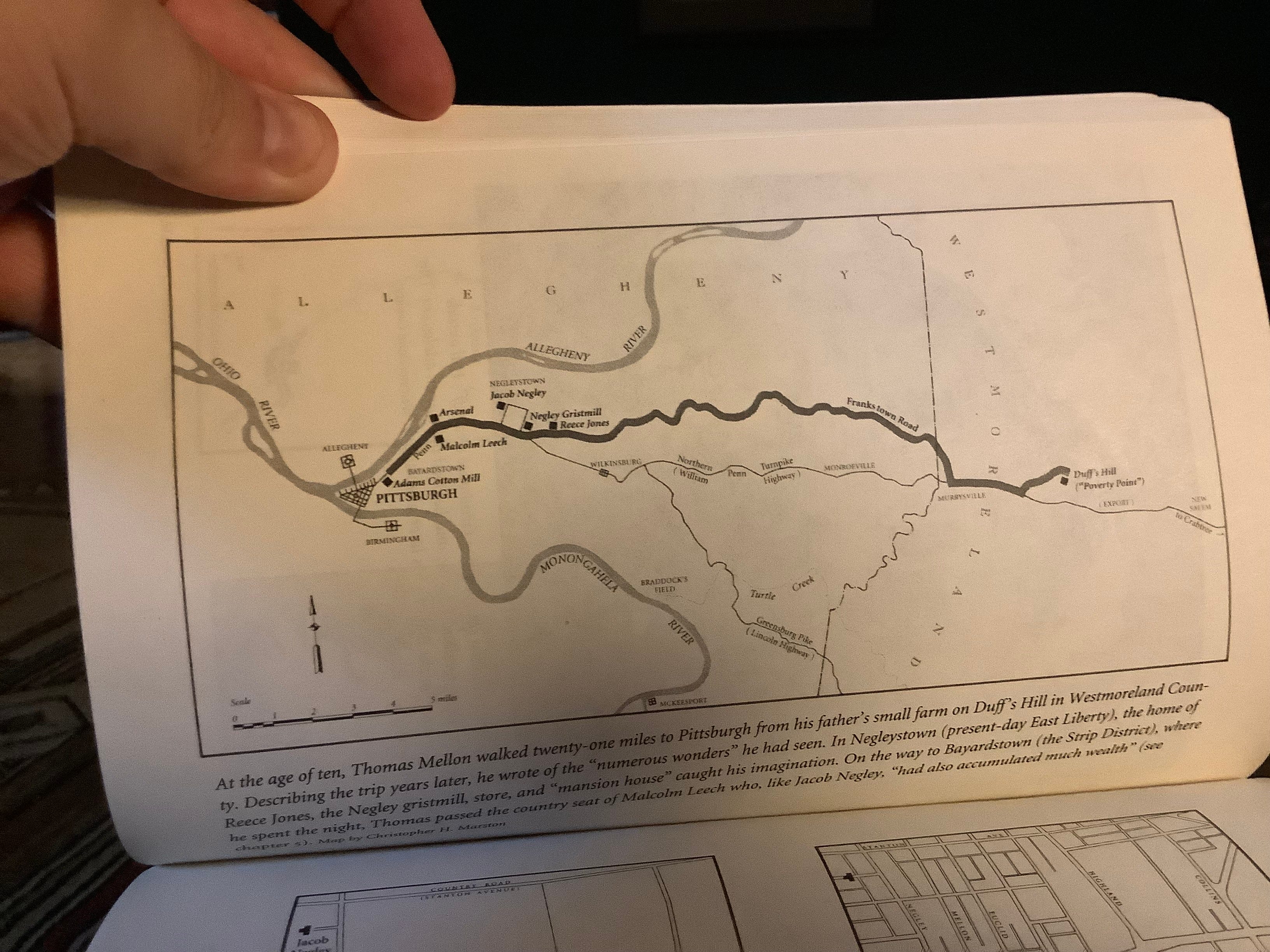
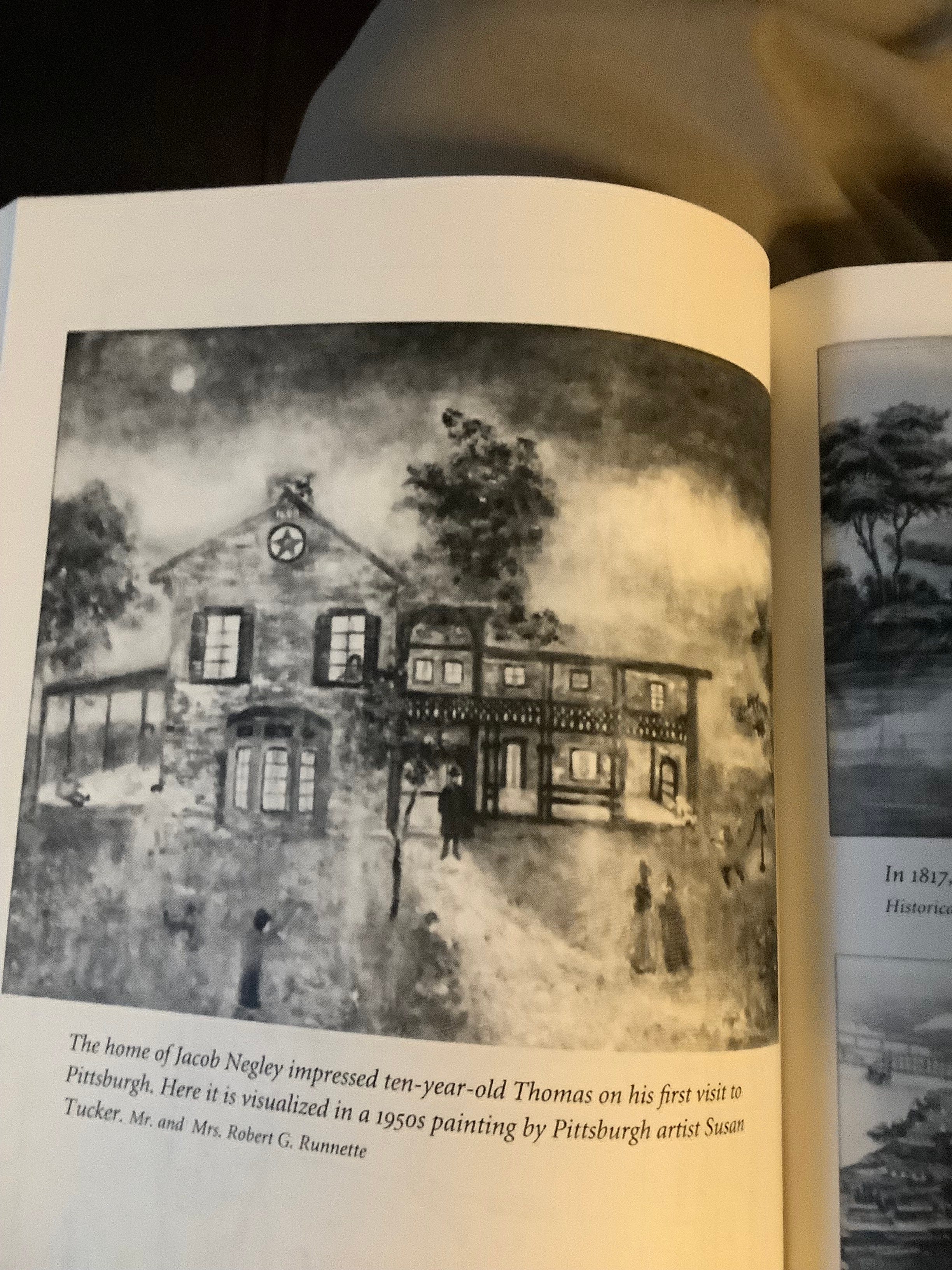
Thomas Mellon was a farm boy from Duff’s Hill in Westmoreland County, east of Pittsburgh — a place his family called Poverty Point. At the age of ten he walked the twenty-one miles into the city, and in Negleystown, present-day East Liberty, the gristmill, store and “mansion house” of Jacob Negley caught his imagination — wealth belonging to people who did not follow a plow. The contentment of the farm never fully recovered. He wrote about it candidly a lifetime later: the pastoral charm dissolved against the evidence of what accumulation could build. He chose accumulation. He read law, sat as a judge, opened a bank at fifty — and, in the kind of detail no novelist would risk, married Sarah Jane Negley. The mansion house that reset a ten-year-old’s ambitions had belonged to her father.
Two generations. That is the distance from Poverty Point to the United States Treasury, where his son Andrew served three presidents and is remembered today for eleven words he may never have said, reported decades later by Herbert Hoover. This publication has dealt with the liquidationist and his defeat. The banker — the method that made the walk pay — deserves a separate reading.
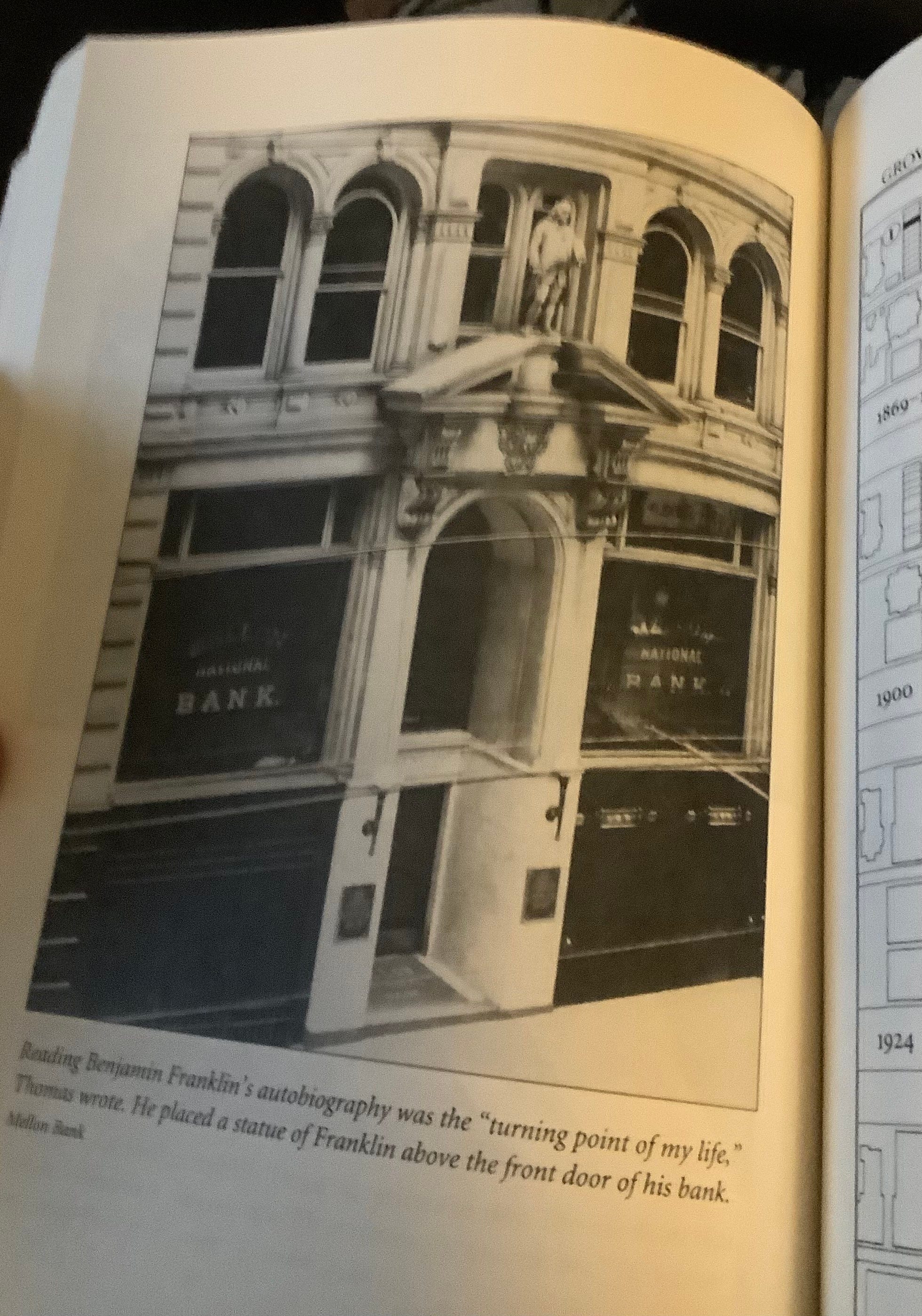
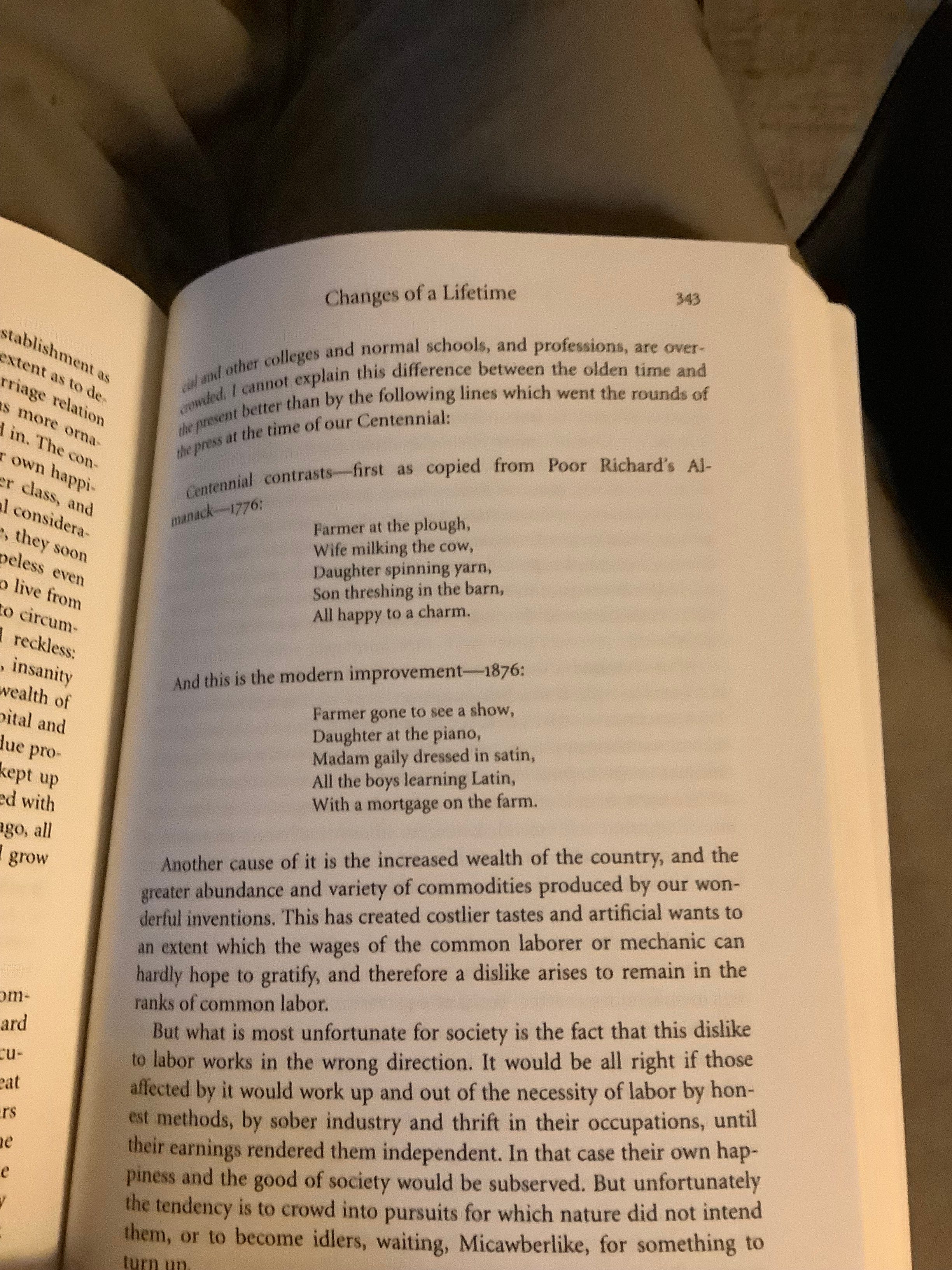
A near life-size statue of Benjamin Franklin stood above the cast-iron door of T. Mellon & Sons on Smithfield Street, placed there by the founder, and it stood over the bank for the next fifty years. It was not decoration. Judge Thomas Mellon read Franklin’s autobiography as a poor farm boy and called it, in his own words, “the turning point of my life.” Late in life he bought a thousand copies to give to ambitious young men. When he wrote his own memoir in 1885, he wrote it the same way: lessons compressed until they could be carried. And in its closing chapter, “Changes of a Lifetime,” the Judge reached for Poor Richard directly — reprinting the centennial doggerel that contrasted the farmer of 1776, “all happy to a charm,” with the modern improvement of 1876: the farmer gone to see a show, the daughter at the piano, the boys learning Latin — “with a mortgage on the farm.” A credit man’s punch line. The almanack form was not our imposition on the Mellons. It was theirs first.
What follows are the house rules in that spirit, tested through panic after panic beginning in 1873.
The rules are simple. Taking them seriously is not. And none requires knowing what Washington will do next.
That makes them unusually valuable now.
Rule I. Back the man, then the asset.
He that backs the asset hath already lost the wager; back the man.
The defining early credit was a young coke producer named Henry Clay Frick, who came to the Judge in 1871 for $10,000. The diligence was not a schedule of assets — Mellon sent his mining partner, James B. Corey, to Connellsville to look at the borrower. The report, as every Frick history tells it: “Lands good, ovens well built; manager on job all day, keeps books evenings… knows his business down to the ground; advise making the loan.” The Frick Collection’s own director concedes the wording has never been verified in the archives. The loans were real, and the Judge kept making them through the panic years that followed — years when coke sold below cost and every prudent lender in Pittsburgh had withdrawn. The account settled emphatically: Frick controlled the Connellsville coke fields by the end of the depression and was a millionaire by thirty.
The Judge ran the same rule at home. He staked his sons in real ventures while they were still boys — Andrew and Richard operated a lumber and coal business as teenagers on their father’s capital — because an heir, like a borrower, has to be read before he can be trusted with the bank. The diligence on Frick and the diligence on his own children were the same diligence.
Andrew ran the same rule at scale. He did not need to know how to run a coke oven. He needed to know that Frick did.
The asset is what you are left with after the judgment was wrong. The position itself is a claim on somebody’s competence, judgment and character.
Rule II. Liquidity is the lesson you only get taught once.
A full purse in a panic buys what ten years’ interest cannot.
T. Mellon & Sons did not emerge untouched from the Panic of 1873 — and the memoir’s account of why is a confession. Days before Jay Cooke failed, an offering of Pennsylvania railroad paper “so well endorsed as to be considered gilt edged” tempted the Judge into reaching for yield, drawing his cash “greatly below our custom or the point of prudence” — about sixty thousand dollars on hand against some six hundred thousand of deposits. Then the storm struck. Roughly half of Pittsburgh’s banks did not come out the other side. His sons sent runners to collect what was owed them; the funds kept the house afloat for several weeks; and the securities in the vault, “though perfectly sound, could not be converted into money at any sacrifice.” The bank survived, narrowly. The author of the liquidity rule had learned it by breaking it — once.
The crisis left him with lifelong convictions: keep liquidity, distrust debt, and hold nothing that cannot become money when money is the only thing wanted. He wrote the real-estate lesson down himself: “Nobody wanted property at any price, because it could not be applied in payment of debts, or held without shrinkage of value and loss.” Land looks safe because it sits still. Unfortunately, it keeps sitting still when you need it to become cash.
Then the half people forget: when the panic ended, the survivors owned the field. Steel needed money. Coal needed money. Petroleum needed money. The Mellons had it.
Dry powder is a call option purchased with foregone carry. Most of the time it looks expensive. Then everybody needs cash on Tuesday.
Rule III. Finance the process, take the equity, hold through.
Interest is the rent of money; ownership is the deed to time.
When the men behind Charles Martin Hall’s aluminum process came through the door in 1889, aluminum was a curiosity without a market — and they came asking for $4,000. Andrew Mellon offered $25,000, so the enterprise would be capitalized to survive. He did not write a loan against the patent. He funded the company through the years in which the process existed before the market did, and the family held what became Alcoa for decades. The oil position was sized the same way. By the fall of 1902, roughly $6 million of Mellon-led capital sat in the Guffey petroleum and refining companies at Spindletop — committed while the field’s output was already dwindling — and the reorganization that followed produced Gulf Oil, with the pipelines, refining and shipping around it.
The banker’s natural temptation is to be paid back. Being paid back feels like winning. It is often the consolation prize, collected in full while somebody else keeps the company.
Rule IV. Silence is a position.
He that says nothing at the table hears every man’s price.
Andrew Mellon was painfully shy, and the reserve functioned as an advantage — contemporaries experienced it that way, whatever he intended. In negotiation his silence created a vacuum, and counterparties filled it: their anxieties, their assumptions, sometimes their bottom lines. Most people cannot stand an unfilled pause. Mellon learned to let them fill it.
Nobody quite knew what Mellon thought until he acted.
The Spindletop record shows the rule at work. James Guffey was the promoter of the age — loud, expansive, his name on the company. The Mellons said little, supplied the capital, and watched the accounts. When production faltered and the reorganization came in 1907, the new corporation was called Gulf, William Larimer Mellon ran it, and the man whose name had been on the door was out of the business. The promoter had supplied the story. The Mellons had supplied the capital — and capital controlled the reorganization.
Know more about the other man’s reservation price than he knows about yours.
One caution, recorded where the rule is stated: silence read as discipline in a negotiation read as indifference in a catastrophe. It worked for fifty years. Then the breadlines formed, and the same trait helped write the epitaph. Withheld information is leverage in a negotiation. It can be gasoline in a panic.
Rule V. Watch and wait.
Time tries the borrower as the fire tries gold: watch, and wait.
The holding periods tell the story better than any statement of principle. The family backed the aluminum enterprise in 1889 and still held it when Andrew died in 1937 — a forty-eight-year position, carried through three panics and a depression. The Mellons kept personal consumption from dictating capital allocation, and they inherited the Judge’s tempo: slowness as an underwriting tool. Given enough time, borrowers reveal themselves. So do booms. So do bad capital structures. A great many financial mistakes require somebody to tell you that you must decide today.
The tempo even had an address. The Judge himself acquired some twelve thousand acres in the Ligonier Valley — trout water, timber and quiet an hour east of the counting house — and left the land to Richard B. Mellon, who developed it into Rolling Rock, a private club to this day. Read the provenance carefully: the terrain for patience was the founder’s own purchase, held, passed down and improved. The Judge bought somewhere, and the family kept it.
The Judge wrote the reason down himself, in the memoir’s bluntest passage: “the normal condition of man is hard work, self-denial, acquisition and accumulation” — and descendants freed from that necessity, he warned, begin sooner or later to degenerate in body and mind. Read the rules in that light and their purpose sharpens. They were not just a method for compounding capital. They were engineered to keep the compounding from ruining the compounders.
The difficulty was never knowing the rules. It was arranging a life in which they could be followed.
Where the Rules Pointed
The rules explain how the Mellons invested. They do not explain where they looked.
They looked at the century.
Electrification required aluminum. Steel required coke. Motorization required petroleum. Mass production required abrasives, chemicals and machinery. The Mellons did not have to predict which consumer brand would win. They looked for the material every winner would have to buy.
Then they looked for the places where supply could not easily respond: a patent, a difficult process, scarce infrastructure, or capital requirements large enough that access to the Mellon balance sheet became part of the moat.
Demand pulled by the age.
Supply constrained and ownable.
Alcoa was the pure case. Hall’s process opened the door, but the wager was larger than Hall: an electrifying and mechanizing world would require a light, conductive metal. Mellon financed the chokepoint before the century understood how badly it would need it.
And they did not stop at the bottleneck. Cannadine’s biography traces the loop: coal from Mellon lands moved into Mellon coke and steel interests, which built Mellon ships, which carried Mellon oil — all of it financed by Mellon banks. Each company was a customer of the next and a collateral of the whole. They owned the chokepoint, and then they owned the circle around it.
That is not merely growth investing.
It is reading the primary trend and buying its bottleneck — and then the loop that feeds it.
The Mellon & Sons Account
Five rules, one method: judge the operator, hold the cash, own the future, keep your counsel, decline to be hurried.
And one warning, kept beside the rules because the Mellons’ own ledger keeps it: the discipline that preserves one balance sheet can wreck a system of them. Applied within the Mellon institutions, the rules carried them through successive panics beginning in 1873. Elevated into a prescription for a collapsing economy in 1930, the same instincts hardened into liquidationism, amid catastrophic results. Keep the banker’s discipline. Do not keep the banker’s macro.
One more entry explains why five rules survived two generations. Cannadine records that decades after the Judge’s death, Andrew’s invariable response to any hard problem was to ask: What would father do? That is the sixth rule, and it is not really a rule. An almanack compounds only if the heir keeps consulting it.
The rules also point at the present, which is the last entry in the account.
For most of the post-Greenspan era — and with far greater force after 2008 — the probable policy backstop became something markets could estimate, price and borrow against. The marginal question became less What is this actually worth? and more What will the Fed tolerate? The first is analysis. The second is mind reading with a Bloomberg terminal.
A central bank that declines to publish its strike price makes the old questions valuable again. Does the business earn its keep, or accrue its way through? What remains when the narrative is removed? Who can buy during the panic, and who will have to sell?
None requires the chairman’s map. The rules never did.
One echo of Rule IV, though, before the account closes. The benefit lasts only while uncertainty disciplines the market without disabling it. Silence can make underwriting valuable again. It can also make everybody reach for liquidity at once.
That is the distinction to watch.
Watch and wait.
A Closing Disclosure
One entry in the spirit of the house, recorded because the reader is owed it.
Poverty Point is a few minutes from where this publication is written. The road past the old Mellon homestead is part of an ordinary local drive, made most days without ceremony.
And there is one more fold in the story, which the writer sets down with the appropriate hedge. The memoir records a fork in the road: Thomas’s father had arranged to buy the boy a farm beside the homestead — the settled life, decided, the deed all but executed. Thomas, with Franklin already in his head, chased the purchase down and stopped it. He chose school. The bank, the Treasury, and everything this essay describes run through that refusal.
As best the old property lines can tell, the farm he refused is the land this publication is written from.
So the account closes where it opened. The rules travelled from a Westmoreland County farm to the United States Treasury and back into disrepute, and they are still legible from the place they left — because the method never depended on the destination. It worked from a farmhouse. It worked from a counting house. It does not care where it is kept, only that it is kept.
It is kept here — on the acres the fortune said no to.
Editors Note: The maxims heading each rule are composed in the manner of Poor Richard and are not quotations from Thomas Mellon’s memoir. Sources: Thomas Mellon, Thomas Mellon and His Times (1885); David Cannadine, Mellon: An American Life. Corrections are welcome and published.
A
When I attended school in Allegheny County Pennsylvania on the wall of the classroom would be a large calendar. The top half of the calendar in gold letters on a dark green background was "Mellon Bank". Mellon financed Pittsburgh and Pittsburgh built the nation.
This is such a great piece. I kind of want to print out the rules in a poster or something and hang it on the wall!