

Most people think history is a fixed archive waiting to be discovered. It isn’t.
History is edited.
We often use the word history to describe two profoundly different things at once: the events that actually happened in the past, and the stories we construct about those events afterward. That distinction matters more than most people realize.
The past itself is fixed. Historical narrative is not.
If you want to be careful about what you claim to know about the past, you must first understand a difficult truth: history is not simply recovered—it is curated. Historians do not uncover the entire past and place it neatly before us; it is too vast for that. They assemble narratives from fragments: words, deeds, ideas, conflicts, and sufferings that have left evidentiary trails into the present.
Unlike experiencing history, which happens to us passively, writing history requires active selection. Some facts are emphasized, while others are ignored. Every history book is, in some sense, an argument about what mattered.
That does not make history fiction. Serious history remains constrained by evidence and verifiable events. Historians cannot simply invent outcomes; they are hemmed in by what actually happened.
The archive constrains the story, but it never tells the story on its own.
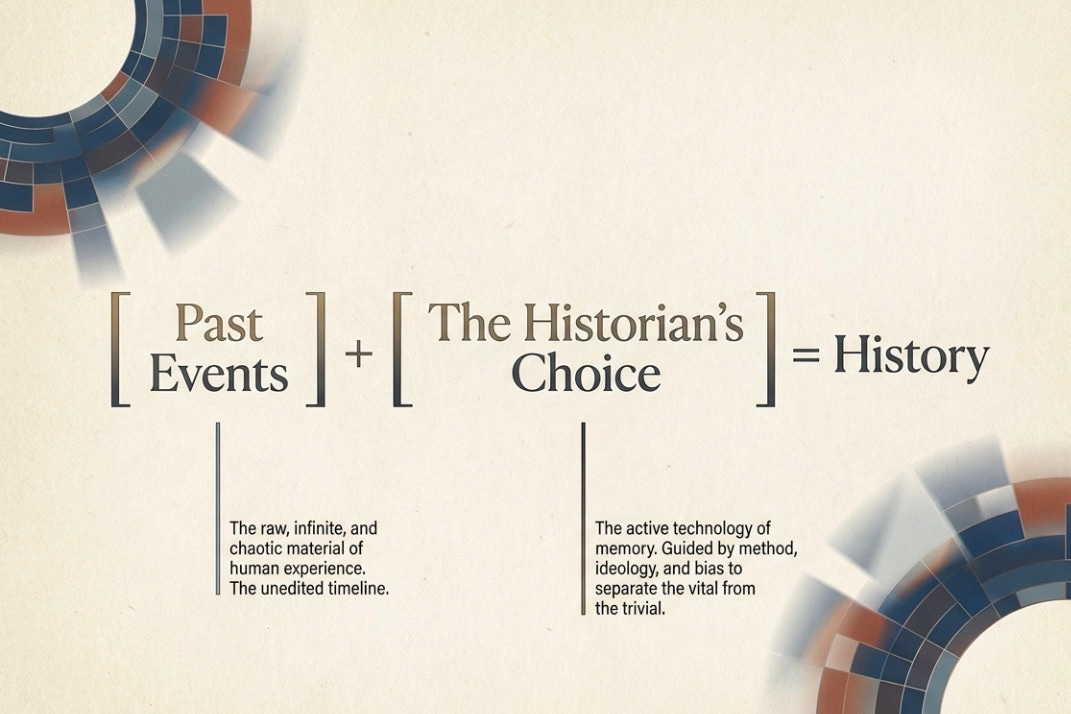
But facts alone do not arrange themselves into meaning. Human beings do that.
Historical narrative is a kind of technology of memory—an attempt to organize chaos into meaning.
Every generation believes it has escaped the biases of the past. Most eventually discover it has merely replaced them with new ones.
The Myth of “Just the Facts”
There is a popular tendency to imagine history as little more than “one damned thing after another”—a warehouse of objective facts waiting to be cataloged. But historical writing requires far more interpretation than most readers realize.
A historian resembles a curator as much as a recorder. Faced with an overwhelming feast of material, they must decide:
Which events deserve attention and which are merely noise
Which underlying forces mattered most
Which voices and evidentiary trails are credible
Which details reveal the deeper structure of events
The act of choosing is unavoidable because the past is too vast to be presented singly. This is why different generations produce radically different interpretations of the same events. Every era carries its own anxieties, assumptions, and moral priorities into the archive.
The past does not change.
The lens does.
How Historians Reframed the World
One of the easiest ways to understand this is to observe how historians across time interpreted the purpose of history itself.
The Celebratory Lens
Herodotus, the “Father of History,” viewed history partly as preservation. His writings chronicled the Persian invasions so that great deeds and human accomplishments would not vanish from memory. For Herodotus, history was civilizational storytelling.
The Suspicious Lens
Thucydides approached history very differently. Writing about the Peloponnesian War, he focused on power, fear, ambition, and political decay.
For Thucydides, history was not a celebration of humanity. It was a warning about it.
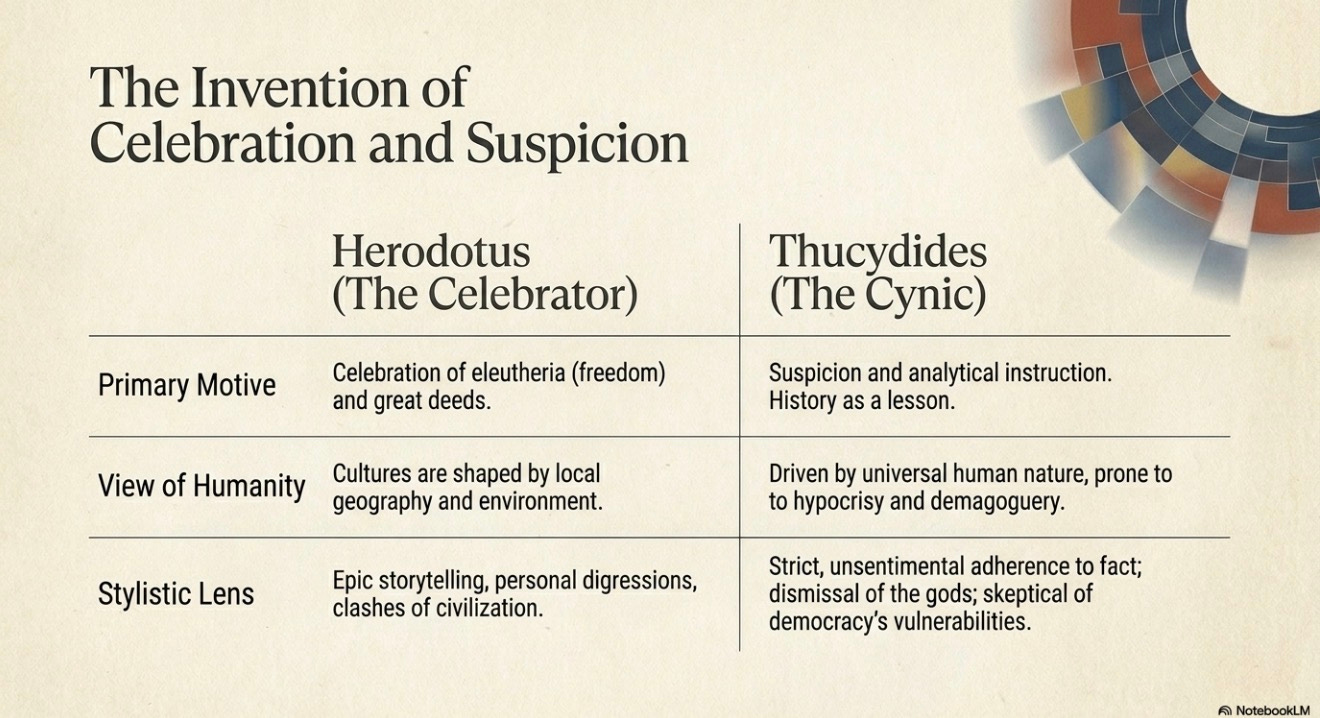
The contrast between Herodotus and Thucydides reveals something essential: even foundational historians studying the same civilization can produce radically different narratives depending on what they believe history is for.
The Escapist Lens
During the collapse of the Roman Republic, Livy looked backward toward an older Rome of civic virtue and discipline.
In Livy, we see one of history’s recurring temptations: using the past as refuge from the disappointments of the present.
The Material Lens
In the 19th century, Karl Marx interpreted history primarily through material conditions and class conflict. Politics and culture were treated largely as downstream effects of economic structure.
History became a struggle over labor, production, and ownership.
The Postmodern Lens
By the late 20th century, many postmodern thinkers grew skeptical of objective historical narrative altogether. They argued that language, perspective, and power shape every account of the past.
The archive, in this view, never speaks for itself.
The Danger of Reading the Past Backward
One of the greatest dangers in historical interpretation is the “Whig interpretation of history,” criticized by Herbert Butterfield. This is the habit of treating history as a steady and inevitable march toward modern enlightenment, democracy, and reason.
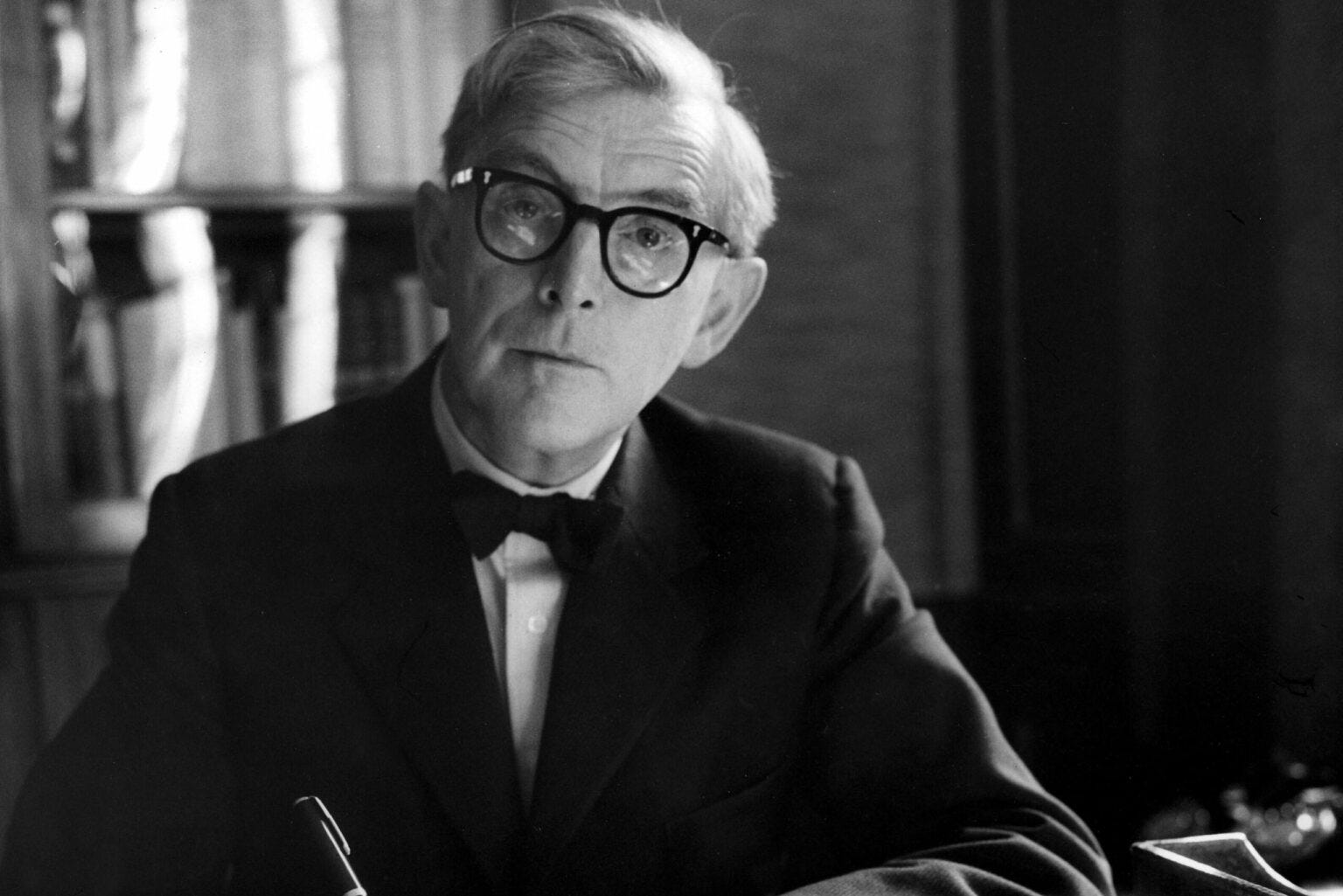
This framework quietly transforms history into self-congratulation.
Instead of investigating the past on its own terms, we search for evidence that validates our present beliefs and institutions. Entire civilizations are reduced to stepping stones leading toward us. Contingency disappears. Failed paths vanish from memory.
But history rarely unfolds in straight lines.
Societies regress. Institutions decay. Moral confidence collapses. Progress is real, but it is neither smooth nor guaranteed.
Proceed With Humility
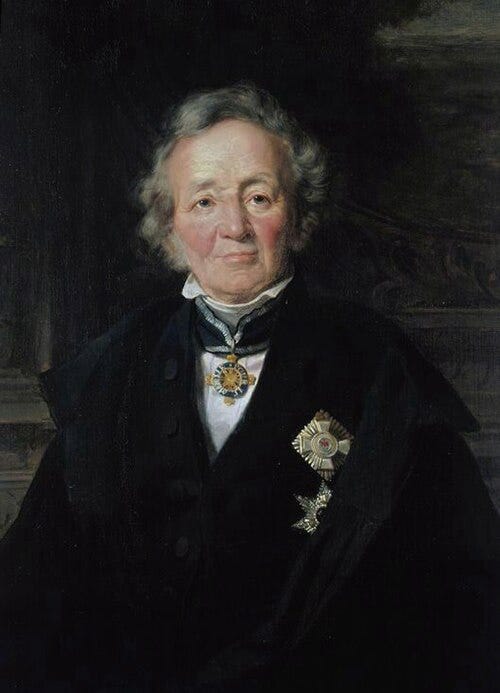
Even the most rigorous historians struggled with these problems. The 19th-century historian Leopold von Ranke famously sought to describe the past wie es eigentlich gewesen—“how it actually happened.”
Yet the deeper historians dig into the archive, the more complexity they uncover.
There are always more documents, more perspectives, and more omitted voices. Perfect historical objectivity remains elusive because human beings must impose order on chaos to make the past understandable at all.
The archive does not arrange itself into meaning; someone chooses the story.
The next time you read a work of history, remember that you are not looking through a transparent window into the past. You are looking through a curated lens—assembled by an author deciding what to emphasize, what to ignore, and what to leave behind.
That does not make history meaningless or false. But it should make us more cautious about confusing narrative with certainty.
In an era of algorithmic feeds, AI-generated summaries, and political mythmaking, understanding how narratives are constructed matters more than ever. We are no longer merely consuming history. Increasingly, we are consuming curated interpretations generated at industrial scale.
The archive survives. Certainty rarely does.
In cases of conflict, history is written by the winners.
Superb entry. I'm picking up echoes of Lewis H. Lapham, who in "The Remembered Past," his preamble for the Memory issue of @@laphamsquarterlyLapham's Quarterly, wrote:
"The recorded past is a spiked cannon. The remembered past is live ammunition—not what happened two hundred or two thousand years ago, a story about what happened two hundred or two thousand years ago. The stories change with circumstance and the sight lines available to tellers of the tale. Every generation rearranges the furniture of the past to suit the comfort and convenience of its anxious present."
https://www.laphamsquarterly.org/memory/remembered-past