

A follow up to When the Check Bounces, the Bullets Fly, and the Carriers Move.
In the last piece, we said Iran was entering a compression phase: broken money at home, lethal control in the streets, and campaign-capable posture gathering offshore.
That wasn’t a metaphor. It was a timeline.
The defining shift now is simple: the external clock moved from posture to contact.
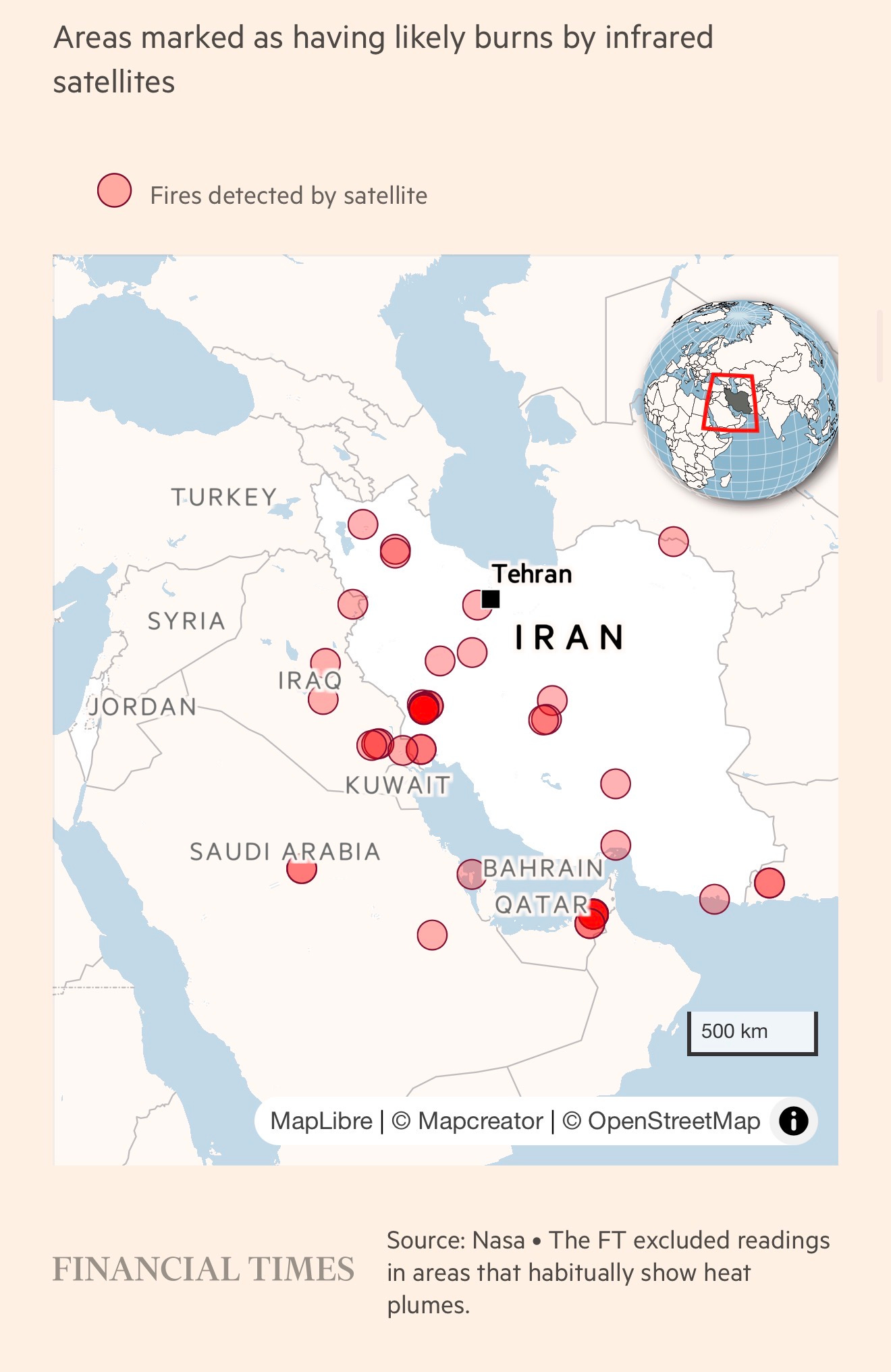
So far, the U.S. campaign has not looked like a single “message strike.” It’s been described as broad in scope and repeatable in design—multiple waves, multiple target sets, and multiple geographies. In other words: this is being framed as operations, not an episode. That matters because it changes the tempo of everything downstream: retaliation, market pricing, and political fracture.
Markets are Already Repricing War
Oil is the cleanest indicator. It doesn’t care about narratives—only about flow risk. Brent has been grinding higher, and the direction matters more than the exact level: the war premium is getting written into price before anyone announces a blockade.
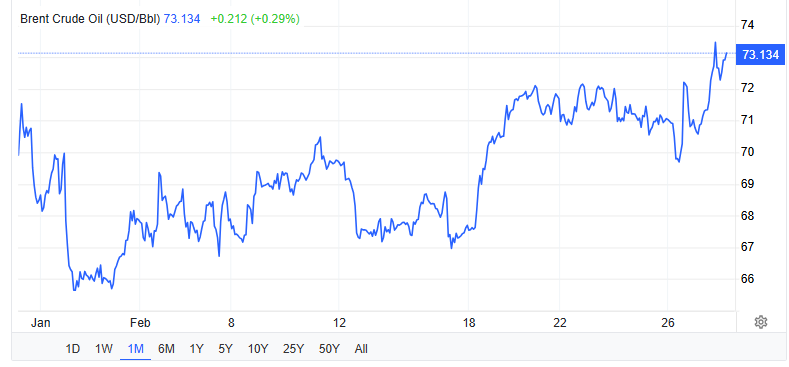
London insurance markets are now preparing to reprice “war risk” coverage for ships moving through the Persian Gulf and the Strait of Hormuz—an early indicator that “risk” is becoming “cost.” Once insurance and routing behavior shifts, you don’t need a formal blockade to get disruption; the financing layer starts doing the work for you.
On the financial front, Treasury Secretary Scott Bessent said the U.S. would be tracking funds moved outside of Iran to sustain economic pressure. Treasury had also been tightening sanctions ahead of the strikes. That’s the squeeze operating in parallel: kinetic pressure paired with financial containment.
The Vacuum
Markets tell you something about surprise. If oil traders were already pricing a high probability of a U.S. strike, then the strike itself isn’t the shock. The shock is duration—how long this lasts, how wide it spreads, and what gets pulled into it.
On the battlefield side, Iran’s launches appear to be arriving in coordinated waves—suggesting parts of command-and-control still function even after hits. Meanwhile, militia networks are signaling intent to widen the map by targeting U.S. bases. That’s the escalation bet in plain view: raise the cost, widen the theatre, stretch decision time.
And domestically, the “vacuum” question is no longer theoretical. A shadowy opposition faction has already declared itself the leadership of a “transitional government.” That’s the Arab Spring lesson arriving early: the organized move first—and they move before anyone is ready.
What this means
We’ve now crossed the line from compression to contact:
Posture became action.
Risk became cost.
The vacuum started taking bids.
The next question isn’t “who’s right on Twitter.”
It’s whether flows hold, whether retaliation widens, and whether anyone credible can prevent the vacuum from filling with the worst available option.
Compressed systems don’t drift.
They snap—and then the vacuum gets a vote.
Here is what we are watching:
1) Flow risk
Watch whether trade and transport start acting like the Strait is compromised—even partially. The moment “normal” routing becomes “contingency” routing, the economic layer has shifted. Ships have continued to sail through the Gulf as normal after the US and Israel attacks on Iran, but that could change fast.

2) Escalation bet
Watch for coordinated retaliation patterns and proxy activation that widen the map without requiring a conventional war. The escalation play is about raising costs and forcing time pressure.
3) Coercion capacity
Watch whether the regime has to increase repression and increase compensation at the same time. That’s when “coercion has a payroll” becomes literal.
4) Narrative oxygen
Watch the labeling. When the regime shifts from “economic protesters” to “terrorists,” it’s trying to turn legitimacy collapse into a sovereignty war. Foreign fingerprints become fuel.
5) Vacuum bids
Watch who claims authority first—and who can actually organize. The danger isn’t only regime collapse. It’s the wrong thing filling the space after.
The simplest way to say it
When the check bounces and the carriers move, you don’t get a clean outcome.
You get compression.
And compressed systems don’t drift.
They snap—then the vacuum gets a vote.
Subscribe to the Rustbelt Reader for less theater and more frameworks.
Just as I feared. Another illegitimate war. When will we learn. Not a win. another misstep that destabilizes the world.
Great comments. Keep them coming. Thanks