
Goldberg’s Moment?
Bari Weiss is treating the mind virus Bernard Goldberg got exiled for naming. But the cure might be the wrong medicine.

By David Loheyde | Pittsburgh PA
Editor’s Note: the term “Mind Virus” is borrowed from Elon Musk. It’s a lot. But we use it given the SpaceX IPO — proof that a catchy enough idea will clear at any price the underlying economics can’t justify. The mind virus, it turns out, is bullish.
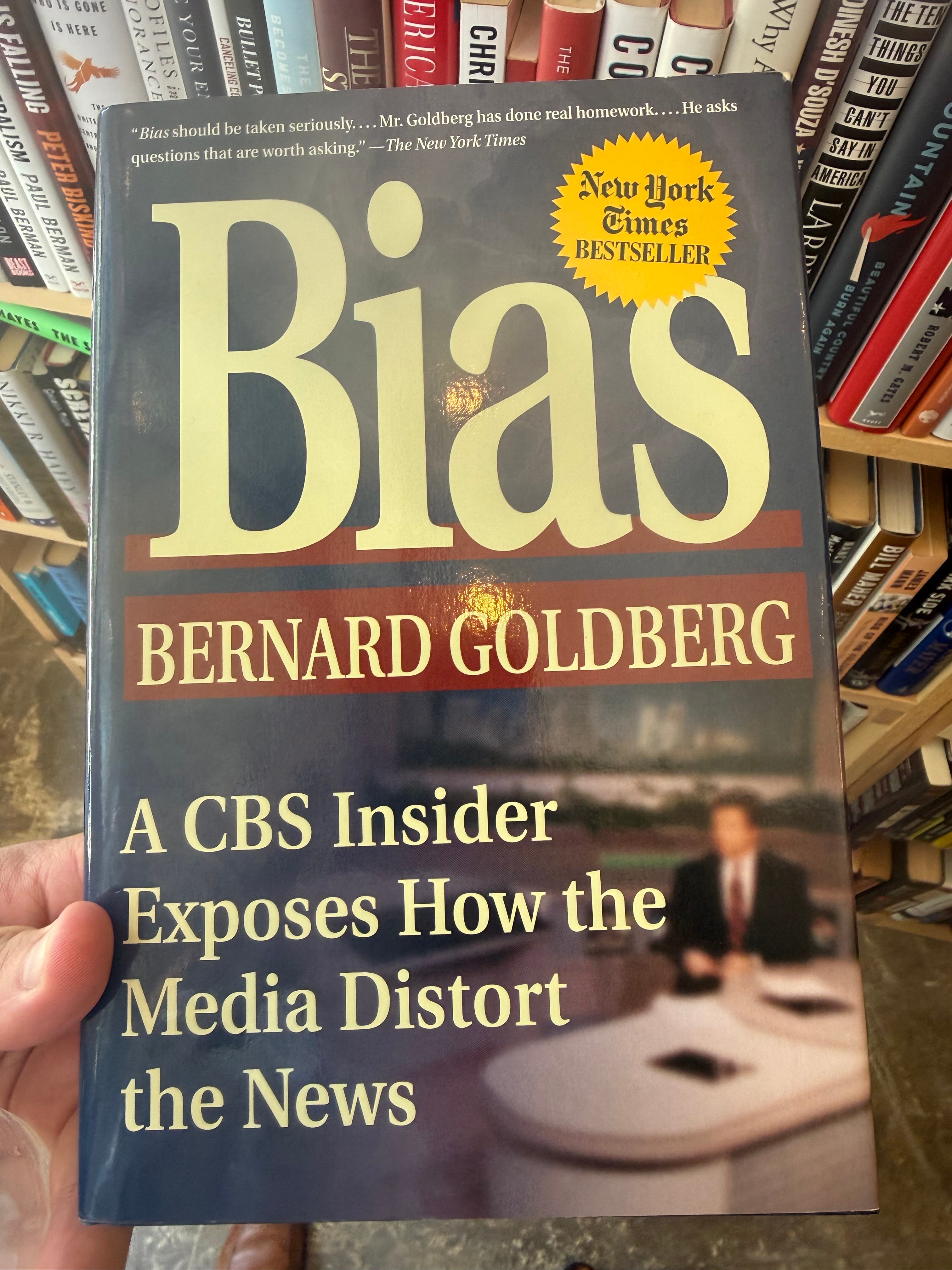
In February 1996, Bernard Goldberg published an op-ed in The Wall Street Journal arguing that the network he’d worked at for twenty-four years tilted left — not in a conspiracy, but in the unconscious way a fish doesn’t notice water.
He was a CBS correspondent in good standing when he wrote it. He was radioactive by the end of the week. People he’d known for years stopped speaking to him.
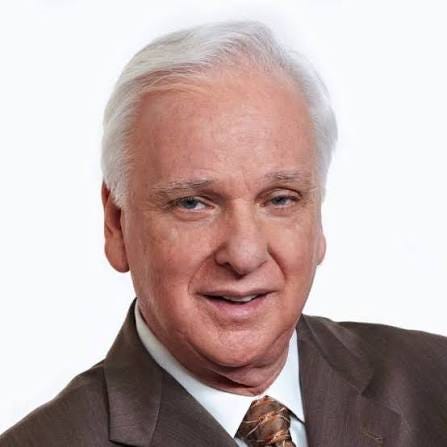
Dan Rather, asked about the piece, said he wouldn’t be pressured by political activists with an agenda “inside or outside” CBS News — and Goldberg, with the driest line in the whole book, notes that the “inside” part would be him. He’d raised a question about the news from inside the newsroom, and the newsroom returned its verdict in a single word, the one that titles his introduction: traitor.
Twenty-four years later, almost to the season, Bari Weiss wrote a different document making an almost identical argument — a resignation letter to The New York Times. The paper, she wrote, had stopped treating truth as a process of collective discovery and turned itself into a performance space, where stories were chosen to flatter the narrowest of audiences. She’d been hired, by the paper’s own admission, to widen its range after it misread the country in 2016. The newsroom rejected the transplant. She left and built The Free Press out of the exile.
Same wound, twenty years apart. The insider names the monoculture; the monoculture names the insider a traitor.

There’s a detail worth sitting with. Weiss is a Pittsburgh kid — Squirrel Hill, daughter of a family that has run a flooring business in the city since 1943. Her father was the house conservative, her mother the house liberal; dinner was an argument, not a consensus, and she has said she relished it. The thing Weiss now says newsrooms lack — a room where two sides sit at the same table — is the thing she was raised inside.
And before she joined the family trade, Weiss’s mother bought makeup for Kaufmann’s — the downtown store I’ve written about as the institution that taught a steel town how to trust. Steel made the wages; Kaufmann’s sold the dignity, one fair price and one provable standard at a time, until a skeptical working city believed it. That is precisely the problem Weiss inherited at CBS: how to make a public that has stopped believing the news believe it again. The daughter of a Kaufmann’s buyer, running the great trust-rebuilding project of her own generation. Betting as one western Pennsylvanian on another, I suspect she’ll see it through, whatever it costs her — a hope, not a forecast, and this essay is about the difference.
And this past year the wound closed a loop nobody could have scripted. Paramount bought The Free Press and installed Weiss atop CBS News — the very network whose disease Goldberg had been excommunicated for diagnosing. His book reads, in 2026, like a chart left in the file of a patient who has finally, twenty years late, checked into the hospital.
Which raises the question worth the whole essay. Is this his moment — the year he turns out to have been right? And if it is, can the people Weiss brought in actually treat what he diagnosed?
Start with what he actually diagnosed, because it’s narrower than the slogan it became.
Goldberg was at pains to say the bias he meant was not going easy on Democrats and hard on Republicans. Real bias, he wrote, comes not from which party gets attacked but from how journalists see the world — a shared set of premises, invisible to the people holding them, that quietly decides which stories are obvious and which are unthinkable.
The problem wasn’t malice. It was a monoculture of perception. One side’s assumptions got booked as plain reality; the other side’s got a label.
For two decades that diagnosis gathered dust. Then CBS did something that looks like finally taking it seriously. Weiss — run out of one newsroom for exactly Goldberg’s heresy — began importing voices the building had never made room for: Niall Ferguson, Coleman Hughes, H.R. McMaster, a Harvard economist, a couple of podcasting physicians. She talked about widening the aperture.
On the surface, this is the cure arriving for the disease. The monoculture, broken up at last.
The diagnosis was right. But the more I look at the prescription, the less sure I am it treats the thing Goldberg identified.
The tell is in Weiss’s own resignation letter. She mourned the loss of collective discovery — the work of finding things out. But the remedy she’s installing isn’t more discovery. It’s more synthesis.
Her new contributors are, almost to a person, not reporters but interpreters. Ferguson is a historian. Hughes is an essayist. The economists model and the physicians explain. Brilliant people, most of them — and their comparative advantage isn’t reporting. It’s interpretation. They have takes on what everybody already does.
That’s a different product wearing the same brand, and it arrives against a backdrop that should worry anyone who cares about the original disease. American newsroom employment fell by about a quarter between 2008 and 2020, almost all of it in newspapers — the reporters who find things out — while commentary platforms multiplied. Full-time statehouse reporters dropped from 374 in 2014 to 245 by 2022. Discovery was already in retreat before Weiss arrived; the synthesis model isn’t bucking that trend so much as crowning it.
And the reason isn’t mysterious. Reporting is expensive, slow, legally risky, and nearly impossible to scale. Commentary is cheap, fast, safe, and infinitely repeatable. The pull toward interpretation is an incentive before it’s an ideology. A good take, like a good meme, prices in instantly and costs nothing to reproduce; the reporting underneath it is the unglamorous cash flow nobody wants to underwrite. The market bids up the idea, not the fundamentals — which is the actual mind virus, and it is bullish.
So a newsroom can be ideologically diverse and still produce no journalism — if what it produces is commentary all the way down. Goldberg wanted journalism with fewer blind spots. What’s arriving is interpretation with different politics. More voices arguing about the news is not the same as more news.
It may be the opposite: a building that explains more each year and finds out less.
So — is it Goldberg’s moment?
Halfway. The diagnosis is his, and it has aged into vindication. The monoculture was real, denying it for twenty years did the institution no favors, and the people who called him a traitor look smaller every year for having done it.
But a diagnosis vindicated is not a cure delivered. The people Weiss brought in are built to treat a different illness than the one he named. He wanted the seeing fixed inside the reporting. What’s being delivered fixes the seeing by adding opining — cheaper, faster, and possibly a worse newsroom. The economics may make that less her choice than a current she’s swimming with.
There’s a test, and it has a clock on it. A newsroom genuinely curing its monoculture will eventually break a story that surprises its own side — that lands badly on the people who hired it. A newsroom merely swapping commentators will produce only synthesis that flatters the new management.
Weiss supplied the standard herself, telling staff she wants work that surprises and provokes “including inside our own newsroom.” Good. Watch what makes the new CBS uncomfortable. If the answer is nothing — if every provocation points outward, never up the org chart, never at the merger that made it all possible — then this was never Goldberg’s moment at all. It was a change of management wearing his book as a credential.
The diagnosis was right. Whether this is the cure or the credential, we’ll know within the year.
Goldberg spent a career insisting the enemy was never the other side’s politics. It was the arrogance of a newsroom that couldn’t imagine being wrong. The open question is whether the new owners inherited his diagnosis — or only his enemies’ certainty.