

“Wisdom comes through suffering.”
The line is older than philosophy—and harder than most people want it to be. Wisdom is always scarce. But it keeps resurfacing in the same kind of weather: The Divine Comedy written from exile, Aeschylus writing from the wreckage of war, the Book of Job from the ash heap, and Dietrich Bonhoeffer from a prison cell.
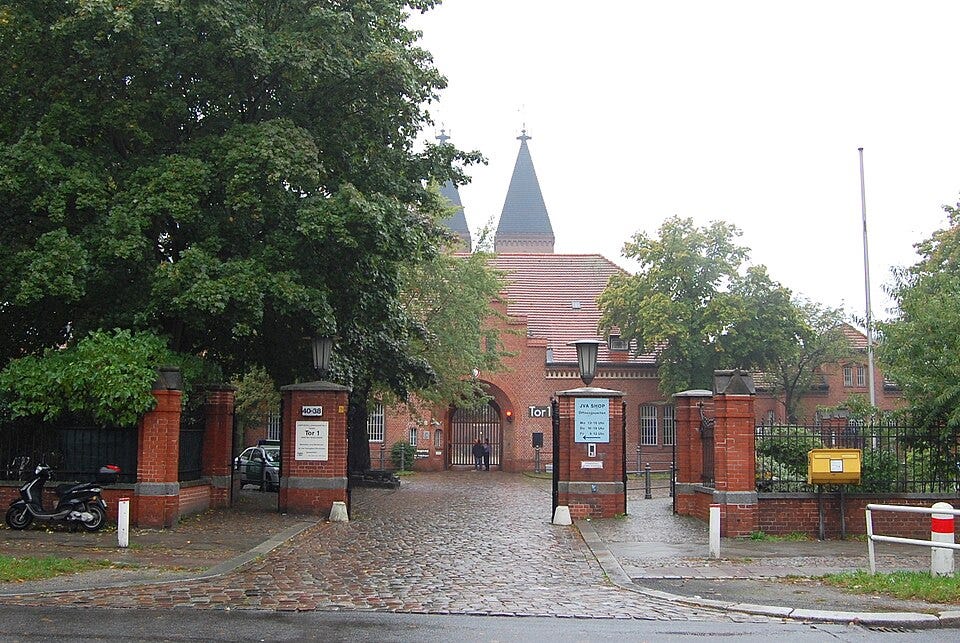
Bonhoeffer wrote Letters and Papers from Prison because the world he knew had collapsed—and he needed to know whether conscience still meant anything when the world itself had gone rotten.
What survives in those pages is theology under load: faith and moral reasoning stress-tested inside a regime where “duty” had been retooled into a machine for obedience to evil.
This book belongs on the same shelf as Apology, Crito, and The Consolation of Philosophy—works written not in triumph, but in confinement, where the soul is forced to account for itself.
The Path to Prison: Choosing the Losing Side
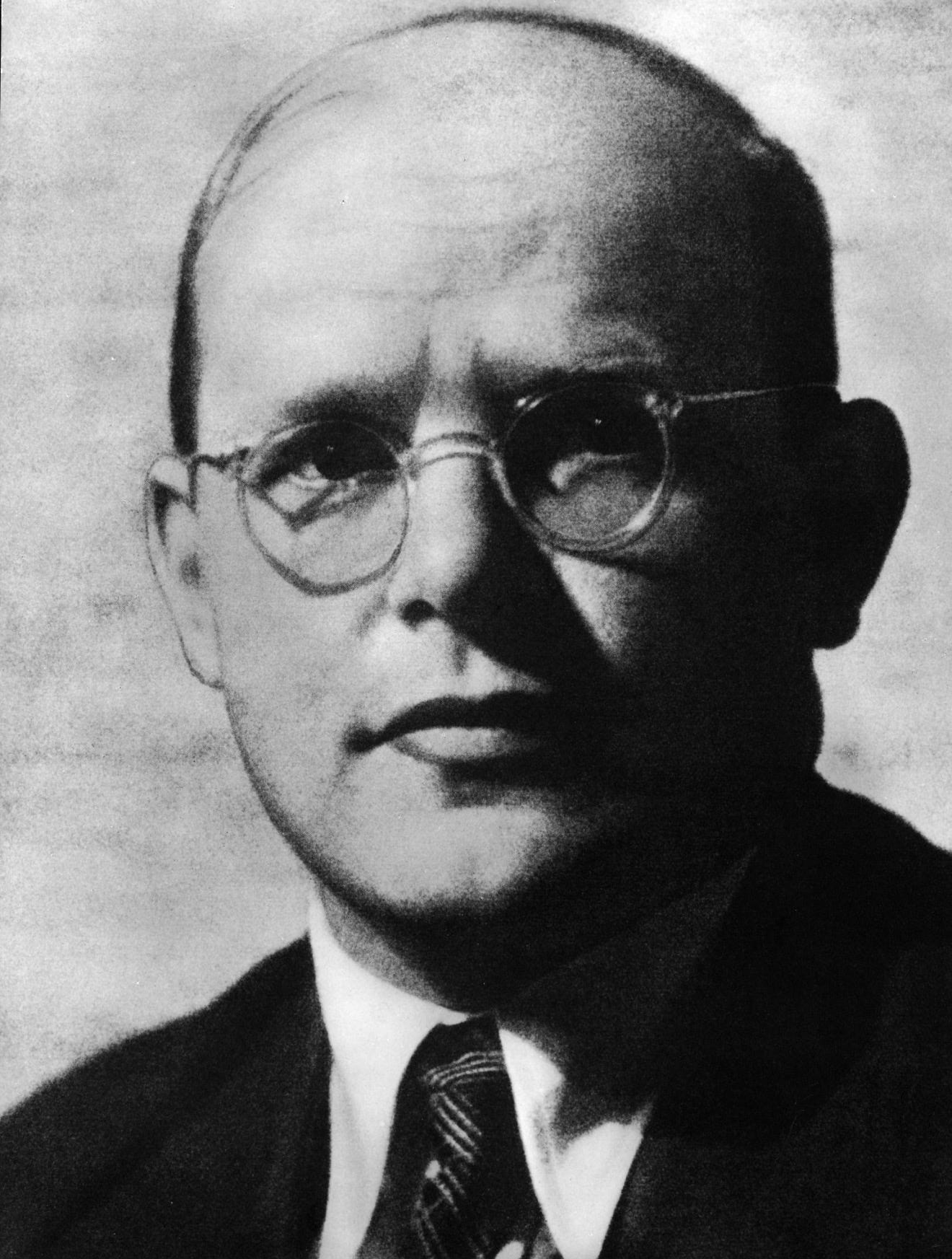
Bonhoeffer was not born into desperation. He came from an educated Berlin family and received the kind of classical formation that German elites liked to believe produced moral seriousness.
In 1939 he traveled to New York. Friends urged him to stay. He refused. He returned to Germany knowing, in a quiet way, that the decision carried a price.
By 1942 he had joined the resistance. He concluded that Adolf Hitler was not merely a political problem, but an evil that could not be managed, outwaited, or “kept in bounds.”
He was arrested on April 5, 1943.
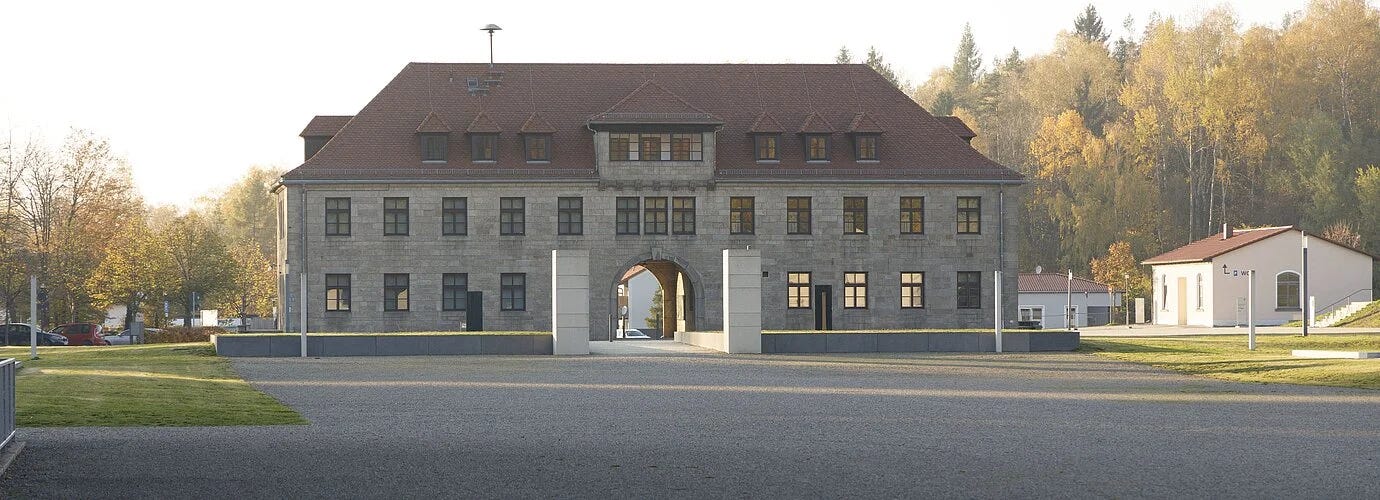
And the timing of the end matters: Bonhoeffer was condemned to death by a drumhead SS court at Flossenbürg and hanged at dawn on April 9, 1945—when Germany’s defeat was imminent and the regime was collapsing, yet still demanded obedience.
He was executed as a traitor—not in the state’s strength, but in its collapse, when it still needed the ritual of punishment to keep the spell alive.
Evil did not kill him in confidence.
It killed him out of fear.
A “World Without God” and Faith Without Illusion
The core of Letters and Papers from Prison—smuggled out through friends—is Bonhoeffer’s most unsettling conclusion: modern man had learned to live as if God were unnecessary.
Bonhoeffer’s “world without God” isn’t atheism. It’s modernity: a world that treats God as something you visit at the boundaries—death, guilt, crisis—while the center runs on power.
He flips it:
“The church stands not at the point where human powers fail… but in the center of the village.”
His point was clear: if your faith only activates when you’re out of options, it’s not faith—it’s an insurance policy.
Bonhoeffer is demanding something else: Christianity stripped of formulas, expressed as responsibility in public, where the real moral constitution must exist.
Duty Under System Failure: Bonhoeffer vs. Thorbeck
One of the most damning contrasts in this story isn’t believer vs. atheist. It’s two educated men, formed by the same civilization, arriving at opposite definitions of duty.
Bonhoeffer’s judge, Otto Thorbeck, treated duty as obedience to the letter of the law—even when the law had become an instrument of murder.
Bonhoeffer, in contrast, treated duty as obedience to the Good—even when the Good required illegal action and personal ruin.
History even nails the point down: Thorbeck was convicted for assisting in murder, then cleared in 1956 by Germany’s highest criminal court on the logic that the Nazi regime could legally execute “traitors”—until a Berlin court reversed that logic in 1996
That arc is the warning: a society can rebuild its buildings faster than it rebuilds its moral logic. And, even more, paperwork recovers before conscience does.
The Great Books in Confinement
In prison, Bonhoeffer read Plutarch, the Bible, and Plato’s prison dialogues—books written for moments when the world stops cooperating.
Because comfortable eras confuse knowledge with wisdom. Comfort also confuses grace with sentiment.
This is where Bonhoeffer’s distinction between cheap grace and costly grace becomes concrete. Cheap grace is forgiveness without friction—belief without consequence, moral language without moral cost. It lets a society keep its religious vocabulary while the machinery of evil keeps turning.
Costly grace is different because it has weight. It demands truth-telling when lies are safer. It demands action when neutrality is convenient. It refuses to outsource conscience to the system.
That’s why the great books matter here. They don’t anesthetize. They orient. They teach the soul how to hold level when everything else tilts.
Bonhoeffer refuses the cheap comfort of explanation. He doesn’t justify evil. He doesn’t launder it into “complexity.” He demands truth—however uncomfortable it may be.
This is wisdom under load: the refusal to let a broken system rename wrong as normal.
The Man Behind the Martyr
History prefers clean heroes. Bonhoeffer’s private writing refuses such a simplification.
In the poem “Who Am I?” he describes a split between the outward man—steady, composed—and the inward man: restless, longing, “like a bird in a cage,” struggling for breath.
He doesn’t resolve the fracture through strength. He resolves it through belonging:
“Whoever I am, thou knowest, O God, I am thine.”
That is the hidden power of the book: not moral perfection, but moral honesty.
Reflections: Questions We Don’t Get to Dodge In Comfort
These aren’t “discussion prompts.” They’re the reflections the text demands we answer in our own age—especially if we work inside institutions.
1) Duty under load
If a law is legal but immoral, when does obedience become complicity? What is the threshold moment where “I’m just doing my job” turns into an alibi?
2) Faith without formulas
If faith can’t be used as a refuge from responsibility, what does belief require in public life—concretely, in action?
3) Treason vs. loyalty
Can someone be a traitor to a government and still loyal to a people? When a regime equates itself with the nation, what does patriotism actually mean?
4) Passive injustice
Is private decency enough inside a system that runs on quiet cooperation? Or does goodness, at certain moments, require actions the code will label criminal?
5) Wisdom through suffering
Can freedom and justice be understood without experiencing their loss? If not, what does that imply about societies that are too comfortable to imagine collapse?
Conclusion: Choice Under Constraint
Letters and Papers from Prison offers no illusion that education inoculates against evil. Bonhoeffer’s killers were educated men too.
What the great books offer instead is orientation—a moral compass that still functions when incentives invert and institutions fail.
Bonhoeffer’s legacy is not martyrdom. It is this:
Even when the system collapses, the soul remains free—
free to accept responsibility,
free to refuse euphemism,
free to choose the Good when history says you’re on the losing side.
That freedom is costly. And it is real.
I am thinking about #5, whether a people who are comfortable can understand freedom and justice; lately, it seems to be so.
I read a biography about Bonhoeffer by a man who writes about him, the name escapes me ( like most do these days). A second book awaits in my shelf.
And then there is Timothy Snyder.
There is an imperative now to define what I feel, without generalizations, prejudices, all the rest that conceals who I am. I keep screaming Why, why do I have to answer these questions
Thanks to the violence erupted into the US, really. I am better to know myself and as Snyder writes, to do what I can.
A big subject very well presented, thank you.
Brilliant analysis and order of presentation.
Thank you!!